







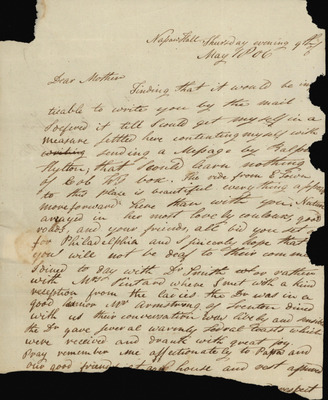
-
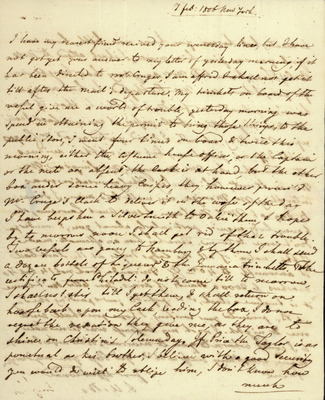
Brockholst Livingston to Susan Niemcewicz, circa November 1806
Henry Brockholst Livingston
circa November 1806
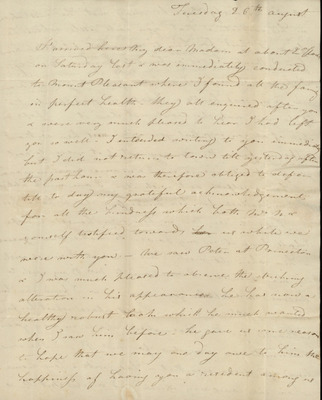
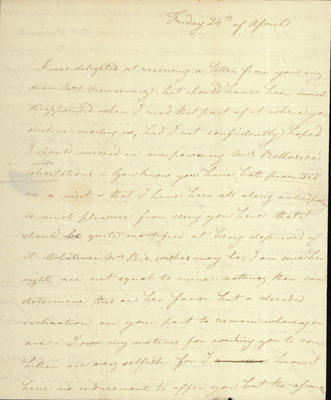
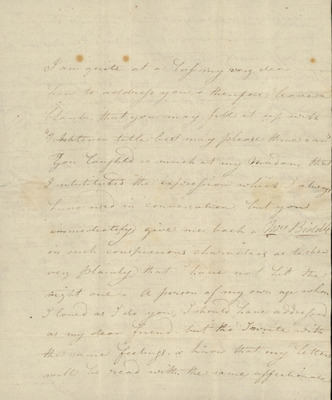
Brockholst Livingston wrote from Bloomingdale, New York to Susan Niemcewicz in Elizabethtown, New Jersey. Asked Susan to extend his thanks to Mrs. Tyler for permitting his daughter to accompany her to the island of Jamaica. The state of Louisa’s health had become so precarious within the last few days, her cough, in particular, was so bad. They thought it most prudent in her feeble state to try nursing and care at home. Brockholst felt that a visit to Elizabethtown to see Susan was not in their power as they were busy moving. If and when Susan, Mr. Niemcewicz, or Peter came to town, a room would always be available for them.
People mentioned: Mrs. Tyler, Mrs. Hylton, Julian Niemcewicz, and Peter Kean.
-
Brockholst Livingston to Susan Ursin Niemcewicz, October 27, 1806
Henry Brockholst Livingston
10-27-1806
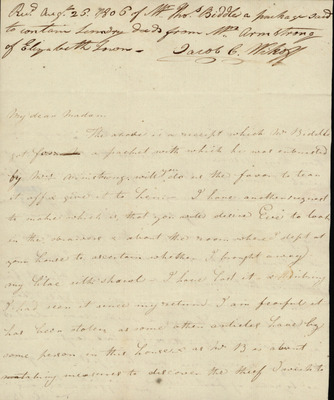
Henry Brockholst Livingston wrote from New York to Susan Ursin Niemcewicz, his cousin, in Elizabeth Town, New Jersey. He is asking Susan to talk with Mrs. Hylton about his daughter traveling with her to Jamaica. Susan's response is on the back telling Brockholst he should bring his daughters to Elizabeth Town so they can meet Mrs. Hylton.She also recomends his daughter bring a black woman to Jamaica rather than a white woman as "the latter are very troublesome in Jamaica"
People Included: Mr. Armstrong, Mrs. Hylton
Places Included: Jamaica
-
James McEvers to Susan Niemcewicz, January 8, 1806
James McEvers
1806-01-08
James McEvers wrote from New York, New York to Susan Niemcewicz in Elizabethtown, New Jersey. James lodged eighty-two dollars and twenty-five cents to Susan’s credit at the Office of Discount and Deposit for a Quarters Interest due to the interest on the $4700 that he borrowed from Susan. If it was convenient for her, James could keep the money for another year on the same terms as heretofore.
-
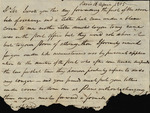
John A. Morton to Julian Niemcewicz, April 16, 1805
John A. Morton
1806-04-16
John A. Morton wrote from Paris, France to Julian Niemcewicz in Elizabethtown, New Jersey. John enclosed a bill of exchange and informed Julian that he received a letter under a blank cover and another from Julian addressed to John’s care that was in the post office. The Post Office would not deliver the letter addressed to John’s care but after some trouble, they suspended the law and delivered it. John supposed they would not do that again and in the future Julian was to put his letters undercover to someone at Paris without changing them or he would have to send a formal Power of Attorney. The Attorney himself would have to give a formal receipt for each letter. John did not know what Julian’s letters contained, but if they were common correspondence they would be safe without all the ceremony of changing and accumulation of responsibility. Discussed a banker in Warsaw that could assist Julian with his banking transactions. Mr. L was in Paris but John did not know if he planned on visiting Julian’s side of the water. Note that the bottom of this manuscript is torn.
-
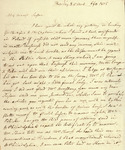
Julian Niemcwicz to Susan Niemcwicz, February 6, 1806
Julian Niemcewicz
1806-02-06
Julian Niemcewicz wrote to Susan Niemcewicz in Elizabethtown, New Jersey. Julian spent the whole day hunting for the vessel and the Captain, whom he found at last. Lodged at Mr. Cruger’s. Mr. P. Church and his wife welcomed a baby girl the night before. Heard that there was an insurrection at Princeton and that many students returned to Philadelphia. Julian was sure Peter had no share in it. Susan’s brother continued well. Discussed an expedition. Julian was in a hurry while writing this letter and claimed “G.” was as poor as a rat in old Wilson’s house. While walking the previous day, Julian had the misfortune to have his body cracked and his face[?] covered in mud.
-

Julian Niemcewicz Agriculture Ledger, circa 1806
Julian U. Niemcewicz
circa 1806
The following item is Julian Niemcewicz’s Agriculture Book which contains lists of various plants that he categorized based on scientific classification. Later pages contain lists of plants that were suitable to cook with, a log of his agricultural activities, instructions on how to utilize chemicals for fertilizers, notes on how to treat toothaches, and instructions for cement to mend china cups, glasses, and the like.
-
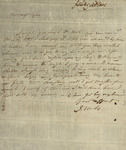
Julian Niemcewicz to Susan Niemcewicz, circa February 1806
Julian U. Niemcewicz
1806-02
Julian Niemcewicz wrote from New York, New York to Susan Niemcewicz, unaddressed. Susan should have received Mr. Le Roy’s letter. Julian would pay off what was advanced by him in Carolina. Was extremely sorry to tell Susan that there were no stocks to be had. Col. Barbly insisted on Julian staying with him.
-
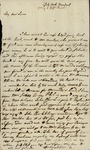
Julian Niemcewicz to Susan Niemcewicz, July 2, 1806
Julian U. Niemcewicz
07-02-1806
Julian Niemcewicz wrote from New York enroute to West Point to Susan Niemcewicz in Elizabethtown, New Jersey. Julian arrived safely and lodged Susan’s book at the bank. He went to Mr. Woolcock who promised to find out some advantageous and safe way of placing her money and planned to write Susan about it. Julian planned to sail that afternoon. Susan would see in the newspapers the names of the prisoners from Miranda’s Schooner, their friend was not amongst them. Julian was told that Miranda was in Bermuda. John Church was going to England in about three weeks.
People mentioned: Francisco de Miranda, Mr. Woolcock, and John Church.
-
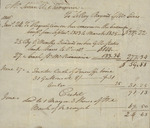
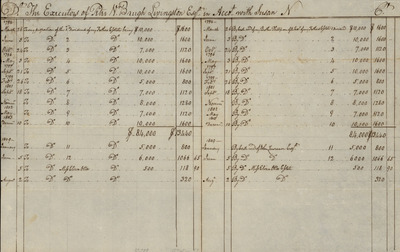
Susan U. Niemcewicz with LeRoy, Bayard, & McEvers, June 27, 1806
Susan U. Niemcewicz
1806-06-27
The following document is an account between Susan U. Niemcewicz and LeRoy, Bayard, & McEvers.
-
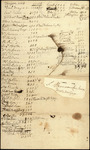
Statements by Joseph Gibb and Susan U. Niemcewicz, March 28, 1806
Susan U. Niemcewicz and Joseph Gibbs
03-28-1806
The following document is a list of financial statements between Joseph Gibb and Susan U. Niemcewicz.
-
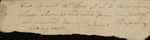
Susan Niemcewicz with James Thorpe, August 10, 1805
Susan U. Niemcewicz and James Thorpe
1806-08-10
The following document is a receipt between Susan Niemcewicz and James Thorpe. The amount was paid in full for driving oxen.
-
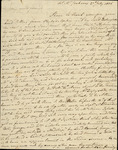
James Ricketts to Julian Niemcewicz, July 27, 1806
James Ricketts
07-27-1806
James Ricketts wrote from Mr. Jackson’s in Hammersmith, West London, England to Julian Niemcewicz in Elizabethtown, New Jersey. Thanked Julian for his kind letters. Discussed visitors and events he and his family were planning on attending. He found the climate in England much more agreeable than the summers in America. His last account of Jamaica was very favorable however they were not as fortunate with their last crop. Mr. Jackson had just returned to Paris from Munich, and he would return to England soon. Wished he could give Julian some favorable news on Poland. They received so many reports that they did not know what to believe. They were all at Vauxhall the night before with a large party. James mentioned a servant named Robert that went with them. Heard that Russia made a separate peace with France, but the particulars were not yet known.
-
James Ricketts to Julian Niemcewicz, June 22, 1806
James Ricketts
1806-06-22
James Ricketts wrote from Otto House near Hammersmith, London to Julian Niemcewicz in Elizabethtown, New Jersey. Thanked Julian for his kind letters of the 28th and 30th of April and the 2nd of May. James wrote Julian repeatedly and hoped he received his letters as he gave an account of Bath. They had just returned from a six-week siege in the great world where night turned into day and passed the most interesting season of the year from the Country amidst the noise and brattle of that immense city. Observed that Mrs. R and Maria had written long letters on that subject already and only wanted to add that he was delighted to find himself once more in the great and hospitable house of his kind friend. Did not believe that any young stranger had ever met with more attention or seen more of the gay and fashionable world than Maria had. They had been at many of the fast horses and were met with uncommon attention. Dined twice at home only to entertain a “few old dowagers.” Discussed provisions and prices. Nothing had been discussed about Henry lord viscount Melville’s trial. He was acquitted a few days prior. Looked over Mrs. R’s letter in which she gave an account of a Masquerade Ball. She mentioned large figures in the great room but neglected to inform Julian how they were dressed like Venus, Apollo, Hercules, and Gladiators. They made them appear a little more modest and had red string ties around their bodies and fig leaves in the proper places. However, with the warmth of the room, many of the fig leaves shriveled up and they looked worse than they would have without anything. For several days, there had been strong reports of a Negotiation that took place with France. The stocks had risen in consequence and from what James had been able to learn, there was strong grounds for the report and he sincerely hoped it were true. The newspapers claimed Mr. Pinckney and Mr. Munro arrived in Liverpool and trusted they would soon adjust everything. [This became known as the Monroe–Pinkney Treaty, A maritime agreement that defined neutral and belligerent rights in times of war and established terms of trade between the United States and the British Empire. The Monroe-Pinkney Treaty of 1806: A Reappraisal, Donald R. Hickey.] The President’s Proclamation had been redacted[?] and James was increasingly mortified to hear of their blackguard expressions[?] James added a few lines dated the 24th of June. He was afforded more time to add to his letter to Julian as the Captain by whom the letter was to go did not plan to take his bag until the following morning. James recounted his jaunt in the Rivers to Woolwich. They embarked above the Bridges around 10 o’clock in the morning in a fine barge and first visited the Great West India Docks, which were the finest in the world. From there they went to Black Wall where they stopped to see the work going on to destroy an immense rock in the River near that place. A few hundred men had been working for four months. From there, they proceeded to Woolwich and afterward to Deptford where all the Royal Yacht were in Dock. After visiting the beautiful ships and frigates, they returned up the River and arrived home at about 8 o’clock in the evening. They dined on board their boat. The same day James completed his letter, they planned to visit Mr. Hopes’ fine house and his fine collections of pictures. They were to dine with Mr. Lewis and planned to go with a large party in the evening to Vana Hall. Informed Julian that he would write him by Mr. Carmac and extended his well wishes to their mutual family and friends including Susan Niemcewicz, Peter Kean, Mrs. Hilton, the Dayton’s, the Ogden’s, Jane Lewmen, and Mrs. Armstrong.
People mentioned: Henry lord viscount Melville, William Pinkney, James Monroe, Thomas Jefferson, Susan Niemcewicz, Sarah Ricketts, Maria Ricketts, Mr. Hopes, Mr. Lewis, Mr. Carmac, Mrs. Hilton, the Dayton’s, the Ogden’s, Jane Lewmen, and Mrs. Armstrong.
Places mentioned Woolwich, London; Deptford, England; Great West India Docks; Liverpool, England; and France.
-
James Ricketts to Julian Niemcewicz, May 9, 1806
James Ricketts
1806-05-09
James Ricketts wrote from London, England to Susan Niemcewicz in Elizabethtown, New Jersey. James was writing from the Secretary of States’ Office. He left Mrs. Ricketts, Maria, and their little darling at Mr. Jackson’s in perfect health. Mrs. R enjoyed better health since they arrived in London. Mentioned the capture of Alexandre Léon Durand Linois and Belle Poule, on their return from the East Indies near the Western Islands by the London of 90 guns and the Amazon Frigate. Happy to inform Susan that the dispute between America and England appeared to be on the eve of being amicably settled. Surprised that he had yet to heard from Colonel Ogden and asked Susan to tell him the following message, “Offer my best wishes to all that do me the favor to inquire after me.” They had very little news from the Continent, everything appeared to be very unsettled. The great topic in London was the trial of Lord Melville. They had ticket for Lord Chamberlin’s Gallery and were very fortunate to have such good friends. They had a most uncomfortable spring; cold, disagreeable, and very unpleasant. Most of the peaches, nectarines, and apricots were destroyed. A few days prior, James saw asparagus for the first time, that he not been found before. All the people agreed that this was the most backward spring ever remembered. Asked that if Susan or any of their friends had a package for him to send it undercover addressed to Richard Penn, Jr. Esq. Secretary of the State’s Office, Downing Street, London as the postage could be saved. Philip and James were both well and would write by the first private moment.
Note: James referenced the action of 13 March 1806, which was a naval engagement of the Napoleonic Wars.
People mentioned: Alexandre Léon Durand Linois 1761-1848; Henry Dundas, 1st Viscount Melville 1742-1811, Phillip William John Ricketts 1786-1842, and James Livingston Ricketts 1778-1880
-
James Ricketts to Susan Niemcewicz, May 18, 1806
James Ricketts
05-18-1806
James Ricketts wrote from likely London, England to Susan Niemcewicz in Elizabethtown, New Jersey. England and America were in a fair way to be amicably settled. Everyone that James convened with on the subject regretted the idea of any serious dispute between the two countries. Sally kissed the letter for her dear Aunt and Uncle N. This letter appears to be incomplete.
People mentioned: Julian Niemcewicz; Sarah Eliza Julia Ann Kennedy Ricketts 1801-1886
-
James Otto Ricketts to James Ricketts, June 24, 1806
James Otto Ricketts
06-24-1806
James Otto Ricketts wrote from Bromley, London to James Ricketts, his father, addressed to John Jackson, Esq. near Hammersmith, London. He wrote that the end of the term was coming up and outlined what he had studied. He said that after the term he planned to travel to Hammersmith and wanted to meet his friends and father there. He mentioned Mr. and Mrs. Dean sent their best wishes to their family and the Jacksons.
-
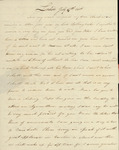
James Otto Ricketts to Susan U. Niemcewicz, July 17, 1806
James Otto Ricketts
07-07-1806
James Otto Ricketts wrote from London, England to Susan Niemcewicz in Elizabethtown, New Jersey. James was surprised at not receiving a letter from her by Lord Bollingbroke. He expected to receive a long one from both her and Peter. James wrote Peter four letters and did not receive any in return, it seemed like Peter did not want to know him at all. Planned to write one more letter and if Peter still did not respond, James concluded that he did all that was in his power to induce him to write. His mother, Sarah, had gone into town to shop and his father, James, went into the country to attend an agriculture meeting. James planned to go to Vauxhall in a few days. He began working on two little ornaments for Susan’s chimney piece but thought he should wait until he could draw a little better before he sent any to her. They were meant to put cards in with seven sails for the days of the week and were very pretty when done well, but James felt they were not fit to send her. Sorry to hear of the death of poor little A[?] and that mirander had been taken with all his men and every one hung. Hoped it was not true for poor Mrs. A’s sake as he was sure it would almost kill her.
People mentioned: James Ricketts (d. 1825), Sarah Livingston Ricketts (1755-1825), Peter Kean (1788-1828), and George Richard Belasise, also known as Lord Bolingbroke (1761-1824)
-
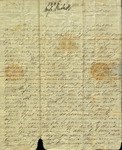
Maria E.P. Ricketts to Christine Williams, March 5, 1806
Maria E.P. Ricketts
03-05-1806
Maria E.P. Ricketts wrote from Otto House, Hammersmith in London to Christine Williams at Walnut Street in Philadelphia. Maria is currently in London having spent time in Bath with Susan Ursin Niemcewicz. She also met a young man named R. Peters who claimed he was engaged, but would not tell the name of his fiancee.
People Included: Susan Ursin Niemcewicz, Mrs. Elliot, R. Peters
Places included: Bath, Clifton, Hyde Park
-
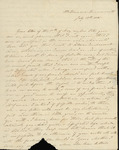
Maria E.P. Ricketts to Peter Kean, July 19, 1806
Maria E.P. Ricketts
07-19-1806
Maria E.P. Ricketts wrote from Otto House, Hammersmith, West London, England to Peter Kean at Nassau Hall, Princeton, New Jersey. Maria received Peter’s letter of the 10th of May. She was unsure who told Peter she wrote to Alexander Macomb as the only one Maria wrote to was Anna of Belville. She heard nothing from her friends but did not blame them as she did not write to them either. Maria seldom heard of an opportunity until just before the vessel was set to sail. Her letters would not be entertaining as there was little going on. They kept such late hours in London, especially the “fashionable world.” Maria mentioned parties she attended including a masquerade. Believed James had already written to Peter, and she was sure that he had given an account of it. James had improved very much in his appearance and was very much grown. Sally did not forget Peter. She had an excellent memory. Sorry to hear of such a melancholy account of Mrs. Kollock’s health.
People mentioned: Anne [Macomb], Alexander Macomb, James Ricketts, Sally Ricketts, Mr. And Mrs. Prevost, and Mrs. Kollock.
-
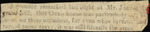
Maria E.P. Ricketts to Susan Niemcewicz, April 26, 1806
Maria E.P. Ricketts
04-26-1806
Maria E.P. Ricketts wrote from Otto House near Hammersmith, West London to Susan Niemcewicz in Elizabethtown, New Jersey. Maria’s parents, Sarah and James Ricketts, went to town to look for lodgings in town. Maria’s mother would not have time to write by the vessel but desired her to tell Susan everything for her. Seeing as how Maria was expected to detail the grand fête they had the Tuesday night, she was certain it would not be as well told. Maria had written a letter to Polly Dayton where she detailed the ball but wanted to repeat it to Susan. It was one of the prettiest balls she had ever been to that was put on by Mr. Jackson. There were upwards of three hundred people in attendance. Mr. Jackson had a temporary room built for the occasion to dance in. It was 75 feet long and proportionally wide and was decorated beautifully with artificial flowers and laurel mirrors all around. At the end of the room, there was a large mirror that reflected all of the company. The room was also remarkably well lit with variegated lamps and looked “quite like a fairy room.” The green house, which opened into the drawing room, had a beautiful effect. It was all rung in a festoon of colored lamps. A window in the drawing room opened to the grounds where a tent was on the green filled with refreshments and seats for the company. Besides the music they danced to, they also had the band of the 14th dragoons. They had another temporary covered way built in case of rain that was decorated with laurel and festoons of colored lamps, similar to the ones leading from the drawing room to the tent. Maria noted how crazy people in England were about a ball. She did not see the paper from the day before but heard that there was a long account of it saying it was the “handsomest thing” of its kind this season. Maria’s father cut out a pun from the newspaper that was made, which Maria did not think was too bad and enclosed it with her letter. Was surprised to receive a letter from Mrs. Bellasise where she claimed Susan said she had not heard from Maria and her family in a long time as they had written by every opportunity. Asked that Susan tell Julian that his little god daughter, Sally, was the wonder of all who knew her. She attended the ball and was awake until 3 in the morning and was the admiration of everyone. Maria asked Susan what she thought of that considering Sally was a 7 year old young lady. She also attended a children’s ball the other evening. George Brown gave her books to read with a lot of pictures in it. Based on the pictures, she the subject and says them word for word to the astonishment of every one who was not in on the secret. A child of her age reading so well was hardly possible. Mentioned mutual friends and acquaintances including Mr. and Mrs. Kennedy, Mr. Digby and Lady Ann, Col. Cunningham, and George Brown.
-
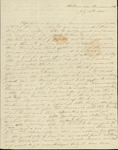
Maria E.P. Ricketts to Susan Niemcewicz, July 19, 1806
Maria E.P. Ricketts
07-19-1806
Maria E.P. Ricketts wrote from Otto House, Hammersmith, West London, England to Susan Niemcewicz in Elizabethtown, New Jersey. Thanked Susan for her letter and the little gift. Maria's father, James Ricketts, was packing up a box of gifts to send to Susan and her friends. Lady Bolingbroke had been with Maria’s mother, Sarah Ricketts, for two days shopping and was surprised that there was nothing new in the shops. Mrs. Carmack planned to sail at the beginning of the following week. Mrs. Penn was so distressed at the idea of parting with her that it made her quite ill. They would likely never see each other again. Maria received a letter from Peter, which was well written. James was mortified that Peter had not written to him yet. They were no longer in London and were staying in the country. They still accepted all invitations and were almost out as much as they were in London. In James’ letter to Susan, he likely mentioned the masquerade they attended. Maria attended a ball and a concert the week before. Mrs. Carmack intended to spend a day or two in Elizabethtown and Maria asked Susan to introduce her to Polly Dayton. Mrs. Kennedy was not well enough to write since she was confined. Received a letter from George Brown who was in Bath. They took Sally to Astley and Sadler’s Wells and she was highly entertained and kept her eyes open the entire time.
People mentioned: Sarah Ricketts, James Ricketts, James Ricketts Jr., Peter Kean, Lady Bolingbroke, Mrs. Carmack, Mrs. Kennedy, Polly Dayton, and George Brown.
Places mentioned: Astley's Amphitheatre and Sadler's Wells Theatre.
-
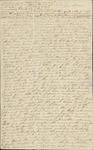
Maria E.P. Ricketts to Susan Niemcewicz, June 18, 1806
Maria E.P. Ricketts
06-18-1806
Maria E.P. Ricketts wrote from London, England to Susan Niemcewicz in Elizabethtown, New Jersey. The last letter Maria received from her aunt Susan was dated sometime in April and she thanked her for it. Maria never found Susan’s letters dull and asked her to continue writing to her. Maria attended two great Masquerades and gave a long account of them in a letter to Polly Dayton. She asked Polly to tell Susan about them since she could not bear to tell the same tale as it was impossible for her to tell how delightful it was. They were the most charming parties she has ever attended. They planned on leaving London next week for Mr. Jackson’s where they planned to remain for a while. For the first time Maria planned to go to Vauxhall where she heard it was the most delightful amusement in the world. She was going to go with Sir Edward and Lady Hamilton, who were both very pleasant people. They took James out of school to see the great review of the Horse Artillery and he said he would write Susan an account of it. Received a letter from Mr. B dated the 4th of May. He said he and Mrs. B planned to visit if Mrs. B was well enough. He added a postscript that made them all very melancholy that read, “if he knew how ill she felt at that moment that he would not speak of coming in so positive a manner that she feels very far from well.” Maria was more delighted with England than any other American. Received a letter the night before from Mr. Kennedy. Poor Mrs. Kennedy was better but still weak and low but, their baby boy was quite well. Maria added a few lines dated June 19th where she wrote that Sally was in high spirits. She had a present that morning from a great favorite of hers, Mr. Palmer the son of Lady Hales. When he was away, Sally always wrote him letters. That morning she received a note from him with a pretty little heart attached. Baron Ferdinand was just there as anxious as they were regarding the arrival of his sister. Mentioned that George Brown received Susan’s letters and that he and his children were quite well.
People mentioned: Polly Dayton, Mr. Jackson, Sir Edward, Lady Hamilton, Mr. and Mrs. B, Mr. and Mrs. Kennedy, Peter Kean, Lady Hales, Mr. Palmer, Baron Ferdinand, Sally Ricketts, and George Brown.
-
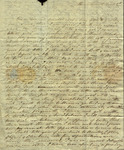
Maria E.P. Ricketts to Susan Ursin Niemcewicz, March 6, 1806
Maria E.P. Ricketts
03-06-1806
Maria E.P. Ricketts wrote from Hammersmith, London to Susan Ursin Niemcewicz in Elizabeth Town, NJ. She talks about her travels in England and what she has been up to. In the original she also enclosed a letter for Peter Kean and apologizes for it being so short.
People Included:Peter Philip James Kean, Mrs. Elliot, Mrs. Dayton, Mrs. Kennedy, Phil, mentions the Prince who is presumably Prince George (Future King George IV),
Places mentioned: Bath, Bristol, Portland Place
-
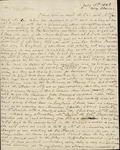
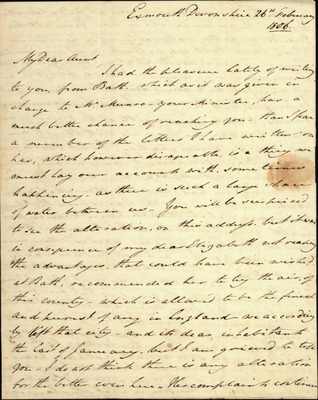
Sarah Ricketts to Susan Niemcewicz, July 11, 1806
Sarah Ricketts
07-11-1806
Sarah Ricketts wrote from Otto House to Susan Niemcewicz, unaddressed. Sarah was on board the Otis with Mrs. Carmack who had taken her passage and would sail in a day or two. Mr. Ricketts planned to go with her to Gravesend where Mrs. Carmack would embark. She wrote to Mr. C to meet her at New York and then she planned to go immediately to Philadelphia and perhaps stay one night at Elizabethtown. If she stayed half an hour at Elizabethtown, she would make a point of seeing Susan and give her an account of Sarah and her family. Sarah promised Mrs. Carmack that if she saw Susan, she would give her peaches. Sarah purchased a ring for Mrs. W and she worried she would not like it. Sarah waited until the last minute in hopes of seeing something new and she chose the prettiest and newest pattern she could find for the price, but all the shops asked for ten and twelve guinea for handsome pearl and Sarah was limited to two and a half. She thought the shops in New York, though not as large, were better and cheaper. The shops in England used to get their fashions from France and improve upon them, but since the war, they had nothing new. Sarah saw no change and they continued to wear their American clothes. She dined at Mrs. Lewis’s with a party and wore the chambray Mrs. K sent her without any alterations. They’ve had constant invitations and Maria was much admired. However, the parties were almost over, and a number of people left. They say Parliament would not sit longer than a week. Sarah took James and Phil to a masked party at St. James’s Palace the week before that was given by Mrs. Boscawen. It was a pleasant party, and the garden was prettily illuminated. Many people thought they would never enjoy America again and thought it cruel to take Maria back. Sarah feared she would be induced to stay as she had several offers. Sarah could not bear being separated from her daughter even though she had no prospect of making as good a match in America as she would in London. Sarah wished their affairs were settled as it was unpleasant not to have a house of their own. She always had an idea that it might appear mean to stay so long with the “Old Gentleman” and she worried over the additional expense they must put on him. Sarah received a new carriage that came to the door on her birthday with their arms as a surprise for the day. On her wedding day, she received a present of a handsome watch. On Maria’s birthday, she received a handsome pearl necklace, bracelets, and earrings. While writing this letter, Sarah received a letter from Lord Bolingbroke mentioning their arrival and wished to see Sarah and her family immediately. Sarah mentioned that Lady B was safe in bed and all danger was over. She delivered a dead child not five minutes after the ladies left the room. Sarah had two dishes made for Susan agreeable to the pattern she gave her. She also sent two hats; one for Mrs. Armstrong and the other for Jane; and two caps for Molly and Becky. Julia’s frocks were thought uncommonly handsome and have several times been sent for as patterns. Children her age generally wore plain clothes; it was only infants that they dressed expensively. Sarah also sent Jane a pair of fashionable earrings and an ornament for the head, a ribbon necklace and bracelets, which worked with long sleeves to easily make yourself a set. Some people wore them in their hair.
People mentioned: Mr. And Mrs. Carmack, James Ricketts, Mrs. W, Maria Ricketts, Mrs. Boscawen, Mrs. Armstrong, Molly, Becky, Jane, Julia, Lord Robert, and Baron Ferdinand.
Places mentioned: St. James Palace
-
Sarah Ricketts to Susan Niemcewicz, June 23, 1806
Sarah Ricketts
06-23-1806
Sarah Ricketts wrote from London, England to Susan Niemcewicz in Elizabethtown, New Jersey. Maria sent Sarah’s letter to Susan last week before she could finish it. In a letter Mr. B[olingbroke] mentioned that they planned to sail in a fortnight if they could get a good ship however, his postscript made them all feel uneasy as he did not know Mrs. B’s situation. Mrs. B did not think her baby was alive and did not think she would ever see them again. Sarah described her experience attending the Marchioness of Lansdowne’s Masquerade after she struggled getting tickets. Sarah wished she could give Susan an idea of the magnificent scene. She heard the Prince of Wales tell the Duchess of York that it was the handsomest thing of its kind that he ever saw. Sarh thought Lady Callendar was one of the finest. The house and garden that took up the whole side of Berkely Square was one of the finest in London and so well calculated for parties. Some guests claimed there were seventeen rooms opened but Sarah did not count them all. She saw five supper rooms with three tables down the center of the room with one at the top. The hall, staircase, and rooms were ornamented with flowers and different colored lamps. Each side of the walk around the garden was festooned with different colored lamps attached to a post. There were several marquees in the gardens with refreshments. The whole scene had a beautiful effect. There were also several bands of music and dancing throughout out the different rooms. Sarah also went into detail on how she and other guests in attendance were dressed.
People mentioned: Maria Ricketts, George Richard Belasie and Mrs. Bolingbroke, Lord Robert, Marchioness of Lansdowne, Mr. Cranford, Lord Ossory, Admiral Bentinck, Lady Francis, Prince of Wales, Duchess of York, Lady Callendar
Printing is not supported at the primary Gallery Thumbnail page. Please first navigate to a specific Image before printing.